
Every business owner we talk to asks some version of the same question: should I lock in now, or wait and see? It is a fair question. Nobody can promise where prices go next. But two pieces of public data have changed the conversation in Texas this year, and both are worth seeing before you decide.
The first comes from ERCOT, the grid operator. The second comes from the U.S. Energy Information Administration. Neither is a sales pitch. Both point in the same direction.
ERCOT's Large Load Queue: About 474 GW
In July 2026, ERCOT told the Texas Senate it is tracking about 474 gigawatts of large new loads that want to connect to the grid. About 90% of that is data centers.
To put that number in perspective, the Texas grid has never used even 100 gigawatts at one time. The requests on file add up to several times everything the state uses on its hottest afternoon.
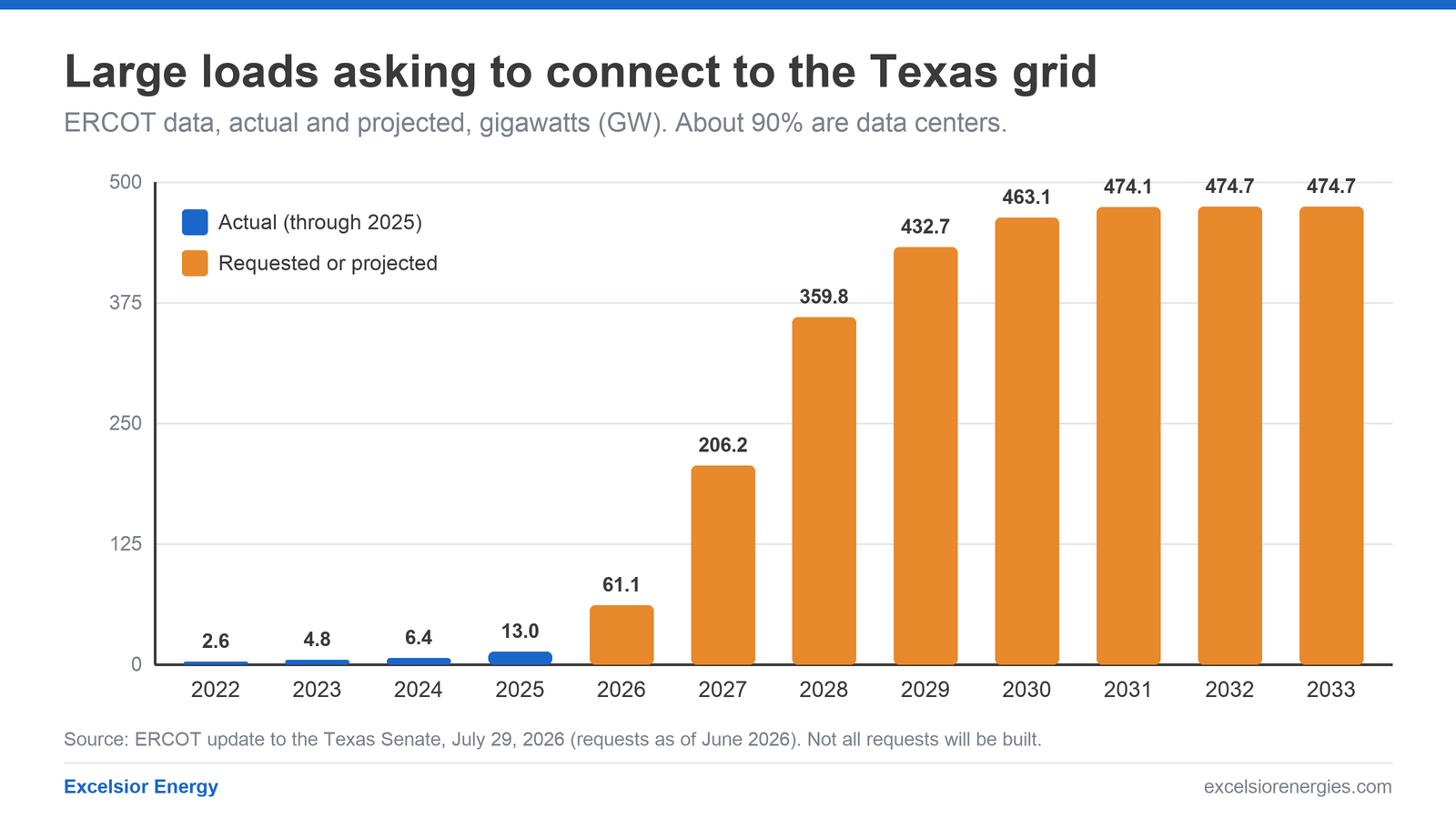
Here is the honest part. Not every request will be built. ERCOT itself has started sorting the queue, and only about 205 GW was eligible for its first batch study in 2026. Some projects will be delayed, shrunk or cancelled. But even a fraction of this demand is a very large amount of new load for one grid to absorb, and the people buying wholesale power for retail providers are pricing that in.
Natural Gas Usually Sets the Price
In Texas, the price of electricity in most hours is set by the last power plant needed to meet demand. Most of the time, that plant burns natural gas. So when natural gas gets more expensive, electricity usually follows.
In January 2026, the EIA forecast that Henry Hub natural gas prices would dip about 2% in 2026, to just under $3.50, and then rise about 33% in 2027, to just under $4.60. Forecasts change, and this one will too. But it is the government's own outlook, and it points up.
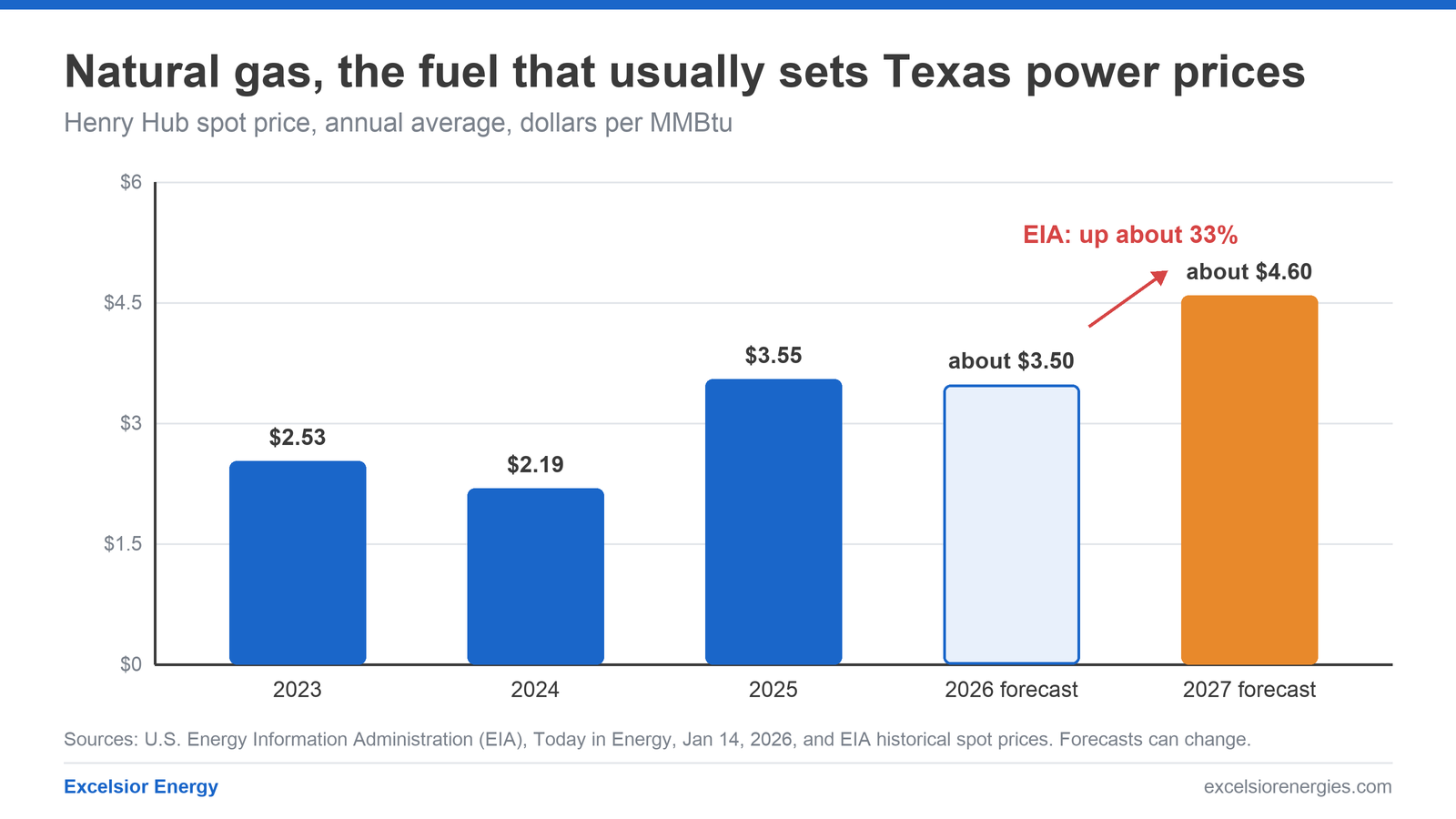
More demand on the grid and more expensive fuel for the plants that serve it is not a combination that usually leads to cheaper electricity.
"Won't the Data Centers Build Their Own Power?"
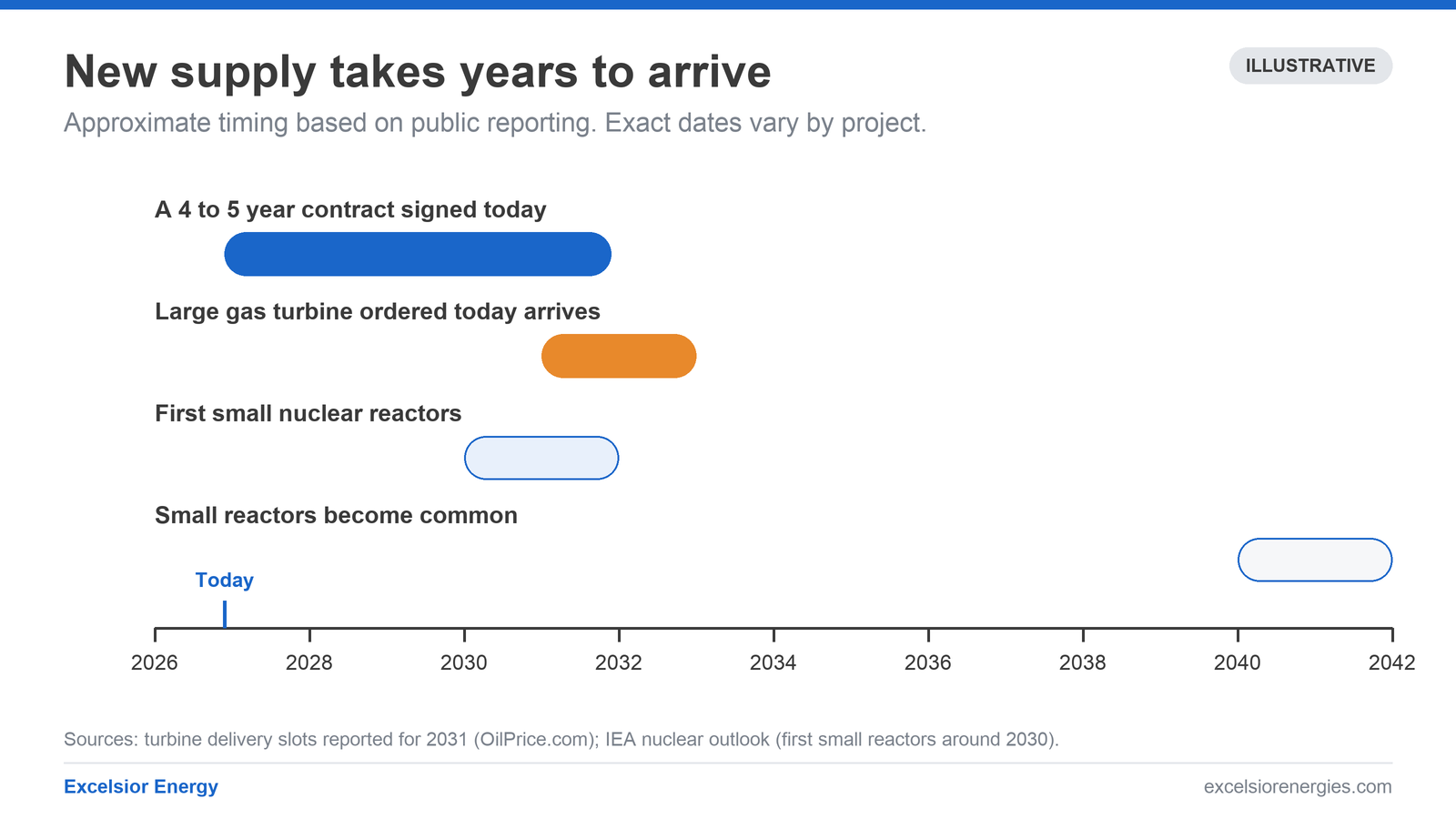
Some will try, and that is a good question to ask. The challenge is timing. Only a handful of manufacturers build the large gas turbines these plants need, and delivery slots are now being sold for 2031. The small nuclear reactors in the news are expected to start arriving around 2030, and are not expected to be common until well into the 2040s.
That relief is real, but it is years away. A contract you sign in the next few months will likely run its full term before most of that new supply shows up.
What About Waiting for World Events?
We hear this often: wait until the wars settle down, then lock in. It sounds reasonable, but Texas electricity is mostly driven by Texas demand and natural gas, not by oil headlines. When an energy ceasefire was announced in October 2026, prices did not fall that week.
Waiting is a choice, and sometimes it works out. Just know that you are betting against the trends above, and that the price available to you today is not guaranteed tomorrow.
What This Means for Your Next Contract
None of this means you should panic or sign the first offer you see. It means timing deserves more attention than it used to. A few practical steps:
Know your dates. Find your current contract end date and put a reminder about nine to twelve months ahead of it.
Look at a future start. You can often lock a price today for a contract that starts when your current one ends, so you do not have to break anything to plan ahead.
Compare the full offer. Look at the term, what is fixed, what can pass through, and how delivery charges are handled, not just the headline rate.
Ask about term length. In a market where the trends point up, a longer fixed term can protect your budget for more of the years ahead. It is worth seeing offers side by side.
Do not let it roll over. Holdover or month-to-month rates are rarely the rate you would choose.
The Bottom Line
ERCOT's own numbers show a wave of new demand on the way, mostly data centers. The EIA expects the fuel that sets Texas power prices to rise in 2027. And the new supply that could ease the pressure is years out. Nobody can tell you exactly where prices will be next year, but you can make sure your next contract is a decision, not an accident.
If you would like us to look at your contract dates and show you what a forward start could look like, Talk to Strategic Client Services. We will walk you through it in plain English.